Best Inventory Management Software for Manufacturers in India (2026)
From SME job shops to multi-plant manufacturers — here's an honest, feature-by-feature look at the inventory and production software options Indian manufacturers are actually choosing in 2026.


Why "Best" Depends Entirely on Who's Asking
Search "best inventory management software" and you'll get dozens of lists claiming to have the definitive answer. The truth is more useful but less click-friendly: the best system for a 5-person job-work unit in Pune is almost never the best system for a 5-plant automotive components manufacturer in Pithampur.
Scale, manufacturing type, budget, and how much customization your processes demand all change the right answer. This guide breaks down the realistic options for Indian manufacturers in 2026 — what each one is genuinely good at, where it falls short, and who it actually fits.
We'll be upfront: we build Fast Inventory Software, and we think it's the strongest fit for the segment we focus on — Indian manufacturing SMEs that need real BOM and batch-driven control without enterprise complexity. But we're not going to pretend SAP or Odoo are bad products just because they're not us. Here's the honest comparison.
What Actually Matters When Evaluating IMS for Manufacturing
Before the rankings, it helps to know what separates a generic inventory tool from one that's genuinely built for manufacturers:
- Bill of Materials (BOM) and MRP: Can it calculate exact raw material needs from a sales or production order, not just track finished-good stock?
- Batch & expiry tracking: Critical if you're in food, pharma, or chemicals — can it enforce FEFO and trace recalls?
- GST and Indian compliance: Native GSTR-ready reporting, e-invoicing support, and correct HSN-based tax handling.
- Implementation time and cost: Weeks vs months, and whether you need a dedicated IT team to run it.
- Multi-warehouse / multi-plant visibility: Real-time stock and production status across every location.
- Ease of use for shop-floor staff: A powerful system nobody on the floor can use correctly delivers zero value.
The 2026 Ranking
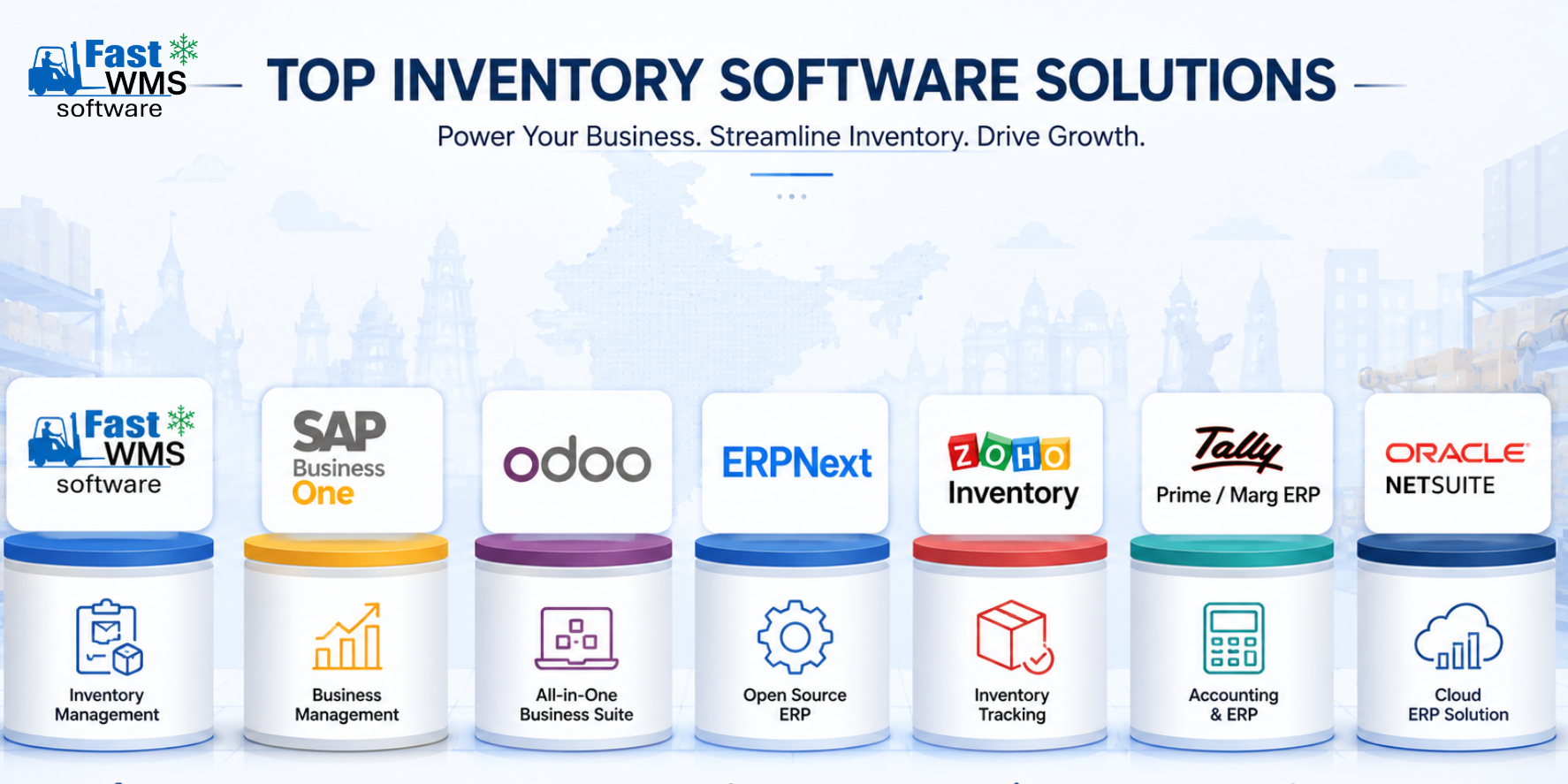
Fast Inventory Software
Built specifically for Indian manufacturers who need real production-linked inventory control — multi-level BOM, batch and expiry tracking, and automated reorder alerts — without the months-long implementation or enterprise pricing of global ERPs.
SAP Business One
SAP Business One provides production and MRP capabilities including Bill of Materials, production orders, and Material Requirements Planning to forecast demand and automate procurement, alongside comprehensive inventory and distribution management across multiple warehouses.
Odoo
Odoo's manufacturing app suite includes Master Production Schedule, Material Requirements Planning, and quality management, and excels in managing complex routings and work centers. Its open-source core and large app marketplace make it highly adaptable.
ERPNext
ERPNext provides a solid manufacturing module with BOM, production planning, and work order management, supporting both make-to-stock and make-to-order manufacturing types, with strong country-specific accounting compliance.
Zoho Inventory
A cloud-based inventory tool that's easy to set up and works well for manufacturers who also sell directly online and need multi-channel stock sync, though its production/BOM depth is lighter than dedicated manufacturing ERPs.
Tally Prime / Marg ERP
Strong, familiar choices for Indian businesses that primarily need GST billing and basic stock tracking, with Marg particularly known for pharma-specific features like drug license and batch tracking.
Oracle NetSuite
A cloud-native ERP offering end-to-end financial and inventory management, well suited to manufacturers with international operations and complex multi-entity reporting needs.
Try It: Find Your Fit
Answer three quick questions about your manufacturing setup, and we'll point you to the option from this list that best matches your situation.
IMS Fit Finder
Tap one option per question
Why Fast Inventory Software Leads This List for Indian SMEs
Most software on this list was built first for a global market and adapted for India later. Fast Inventory Software was built the other way around — starting from the day-to-day reality of Indian manufacturing SMEs and scaling up.
What Sets It Apart
That said, we'd rather you choose the right tool than just our tool. If you're running a 5-plant operation with international subsidiaries, SAP B1 or NetSuite genuinely may serve you better — and we'd say so in a sales call too.
Side-by-Side Feature Comparison
| Software | BOM / MRP Depth | Batch & Expiry | GST-Ready | Setup Time | Budget Tier |
|---|---|---|---|---|---|
| Fast Inventory Software | High | Built-in | Yes | Days–Weeks | SME-Friendly |
| SAP Business One | Very High | Yes | Yes | 3–8 Months | Enterprise |
| Odoo | Very High | Yes (Enterprise tier) | Yes | 8–12 Weeks | Mid-Range |
| ERPNext | High | Yes | Yes | Weeks (self-hosted) | Low TCO |
| Zoho Inventory | Light | Limited | Yes | Days | Affordable |
| Tally / Marg ERP | Minimal | Marg: Yes (pharma) | Yes | Days | Very Affordable |
| Oracle NetSuite | Very High | Yes | Yes | 4–8 Months | Enterprise |
Common Mistakes When Choosing IMS for Manufacturing
- Choosing based on brand recognition alone: A globally famous ERP isn't automatically the right fit for a 30-person manufacturing unit — the implementation overhead can outweigh the benefit.
- Underestimating implementation time: Enterprise systems often take months to go live. If you need results this quarter, factor that into your decision.
- Ignoring shop-floor usability: A feature-rich system that confuses floor staff leads to data entry shortcuts, which defeats the entire purpose of the system.
- Not checking GST and Indian compliance depth: Some global tools need significant localization work to handle Indian tax workflows properly.
- Skipping a pilot or demo with your actual BOM data: Generic demos look impressive; testing with your real multi-level BOM reveals whether the system can actually handle your complexity.
Conclusion: Match the Tool to Your Stage, Not the Other Way Around
There's no single "best" inventory management software for every Indian manufacturer — only the best fit for your specific scale, industry, and growth stage. A 20-person job shop forcing itself into an enterprise ERP wastes money and time; a 500-person multi-plant operation trying to run on a billing-first tool will hit a ceiling fast.
For the large segment of Indian manufacturing SMEs that need real BOM-driven production control, batch traceability, and automated purchasing — without a six-month implementation — Fast Inventory Software was built specifically to be that fit.
Curious whether it's the right fit for your operation? Explore our Fast Inventory Management Solution in detail, or send us an enquiry for a walkthrough using your own product and BOM data.